BEACON: Shining a light on exercise oncology research
Why how we do the research matters as much as what it finds
 A lighthouse beam shines across the words ‘the BEACON Blog: shining a light on exercise oncology research’. Original illustration by Edward N. Stanhope for BEACON.
Exercise oncology has never had stronger evidence, and how we build that evidence has never mattered more.
Over the past two decades, research on exercise across the cancer continuum has grown remarkably. An international consensus statement now concludes that exercise is generally safe for people living with and beyond cancer, and that specific doses can improve anxiety, depressive symptoms, fatigue, physical function and health-related quality of life [1]. In 2025, a phase 3 randomised trial across 55 centres reported longer disease-free survival with a structured exercise programme after chemotherapy for colon cancer [2].
That progress belongs to many people: researchers, clinicians, exercise professionals, advocates and, above all, the thousands of people affected by cancer who have given their time and effort to studies. It also brings responsibility. A field that hopes to change cancer care needs evidence that is rigorous, transparent and honestly interpreted.
That is why I’m starting the BEACON Blog.
The future of exercise oncology depends less on producing more research than on producing better research: well designed, ethically conducted, fully reported and inclusive.
What the BEACON Blog will do
BEACON stands for Best practices in Exercise and physical ACtivity for Oncology research and traiNing. As the name suggests, the BEACON Blog will shine a light on the methodological practices behind exercise oncology trials. Some of those practices are strong and some need work, and seeing both clearly makes the path through a study easier to follow.
The blog will follow research around its full cycle (Figure 1): how we choose the question, design the study, run it safely, analyse the data, report the results and use the evidence, which in turn shapes the next question. Along the way we’ll meet control groups, randomisation, blinding, sample size, fidelity, good clinical practice and much more.
Each month, I’ll take one of those practices and apply it to published exercise oncology research. I’ll look at it through a trialist’s eyes, connecting it to the landmark methods literature and to good clinical practice. Every post will include short interactive tasks, because appraisal is a skill you build by practising.
More research is not the same as better research
In 2009, Iain Chalmers and Paul Glasziou argued that most of the investment in health research is lost through avoidable failings [3]. Their estimate was that around 85% of research effort is wasted. The reasoning was simple: about half of studies are never published in full, about half of published reports are not usable, and about half of studies have avoidable design flaws [4].
Multiply those halves together and only about one study in eight survives all three. That’s 12.5%, which they rounded to a conservative estimate of 85% waste [4]. These are broad figures from across medical research, not exercise oncology specifically, and the authors set out the assumptions behind them [4]. But the logic is hard to escape, as you can see below.
More research or better research?
Change the number of studies, or how well each stage is done, or pick a scenario. Watch how many studies end up giving usable, trustworthy evidence.
What happens to the research effort
Doubling the number of studies doubles the usable evidence, but it doubles the waste too. Improving each stage, even modestly, does more with the same effort. That is the case for better research rather than simply more of it.
Evidence in action: how well do we describe our own interventions?
Exercise oncology is not immune. Meneses-Echavez and colleagues reviewed 131 randomised controlled trials of exercise for people with cancer, published between 2010 and 2017 [5]. They checked how completely the 138 exercise interventions were described against TIDieR, a checklist of what someone would need to know to deliver an intervention again.
None of the TIDieR items was fully reported across the trials [5]. Reporting of individual items ranged from 42% to 96%. Who delivered the exercise, and their expertise, was described for only 42% of interventions, and how well delivery was planned to be checked for only 46% [5].
This shows that a large and growing evidence base can still be hard to use. If another team can’t tell who delivered a programme, they can’t reproduce it, and a service can’t adopt it. None of that needs more trials to fix. The review covers trials up to 2017, so reporting may have improved since, but that is something to check rather than assume.
Avoidable research waste, and building quality in
- The principle
- Research is wasted when it asks the wrong question, uses a design that can't answer it, goes unpublished, or is reported too poorly to use. Most of that waste is avoidable.
- Why it matters here
- Exercise interventions have many components (dose, progression, supervision, setting), so they are easy to under-report. Each incompletely reported trial asks participants to contribute to evidence that can't be fully used [5].
- Landmark evidence
- Chalmers and Glasziou's 2009 Lancet paper set out how waste accumulates across the research process and estimated that around 85% of research investment is lost [3].
- GCP note
- ICH E6(R3), in effect since July 2025, builds on the idea of designing quality into trials from the start, with a proportionate, risk-based approach [6]. It was written for medicines, but its principles are the expected standard for well-run exercise trials too.
Research with, not about, people affected by cancer
At the heart of every exercise oncology study are people who volunteer to take part. They give their time, energy and personal information, and often their hope that others will benefit. Research ethics therefore can’t be a regulatory hurdle alone. It has to guide every step, from choosing the question to communicating the answer.
For that reason, I’d argue that a well-designed study is an ethical obligation, not a methodological luxury. People affected by cancer also bring expertise researchers lack: they know the barriers to taking part, the practical limits and which outcomes matter in daily life. The principle at the heart of BEACON is simple: nothing about people affected by cancer without people affected by cancer.
Equity is part of this, and it is a methodological principle, not only a recruitment target. A systematic review of 28 prostate cancer exercise studies, with 15,946 participants, found that reporting of ethnicity varied widely and no study included a statement on inclusivity [7]. Few men from ethnic minority groups took part in the UK studies [7]. If research mostly includes the people easiest to recruit and retain, its findings may not apply to those who could benefit most.
Who takes part, and who shapes the study
✗ Poor practice
Participants are recruited from whoever is easiest to reach, ethnicity is reported inconsistently, and the study has no statement on inclusivity. This pattern is common in prostate cancer exercise research [7]. People affected by cancer appear only as participants, and any involvement goes unreported.
✓ Good practice
People affected by cancer, including from under-served groups, help shape the question, design and delivery. The team plans inclusive recruitment, reports who took part and who didn't, and describes involvement using the GRIPP2 short form, a five-item checklist covering aims, methods, results, outcomes and critical perspective [8].
Ambition and rigour are not competing positions
Questions about exercise, tumour biology, treatment response and survival are important frontiers, and ambitious research is essential. But evidence must be described at its actual maturity. Early mechanistic findings, exploratory analyses and hypothesis-generating studies are valuable, and they should be labelled as such.
I find it helpful to hold two ideas together. Exercise has enormous potential to improve the lives of people affected by cancer. The evidence for that potential must keep getting stronger. Together, they are the foundation of a trustworthy discipline.
Decide what you think, then reveal the verdict
“Exercise is safe and helpful for people living with and beyond cancer.”
“The evidence now shows that exercise cures cancer.”
“More studies will settle the questions that remain.”
Think of a study you are planning, running or reading. Is the question important? Will it meaningfully advance knowledge? Does it respect participants' contributions? Are the conclusions proportionate, and is uncertainty communicated honestly? Which is hardest to answer "yes" to?
Question 1. A small exercise trial finds an exploratory change in a blood biomarker linked to tumour growth. Which summary is most proportionate?
Choose an answer to see the feedback.
A. "Exercise slows tumour growth."
B. "This exploratory finding is hypothesis-generating and needs testing in larger trials with clinical outcomes."
C. "The finding should be ignored because it is exploratory."
D. "Exercise may cure some cancers."
Question 2. Using the "2009 estimate" in Figure 2, which change produces the most usable evidence from the same effort?
A. Running twice as many studies
B. Improving publication, reporting and design so that each reaches 75%
C. Improving reporting to 100% but leaving the other stages unchanged
Question 3. Why is equity described as a methodological principle, not only a recruitment target?
A. Because funders require it
B. Because who takes part determines who the findings apply to
C. Because diverse samples always give larger effects
What this means in practice
- If you design or run studies: ask whether the question matters and whether the design can answer it, plan to publish whatever the result, and report the intervention fully (TIDieR) and involvement transparently (GRIPP2).
- If you are a clinician or exercise professional: look for how an intervention was delivered and who took part before deciding whether a finding applies to the people you work with.
- If you are a trainee: constructive critique is how the field improves. Asking difficult questions about design is a contribution, not a challenge to anyone.
- If you are affected by cancer: you can help shape research, not only take part in it. It is also reasonable to ask how strong the evidence behind a claim is.
References
- Campbell KL, Winters-Stone KM, Wiskemann J, May AM, Schwartz AL, Courneya KS, et al. Exercise guidelines for cancer survivors: consensus statement from international multidisciplinary roundtable. Med Sci Sports Exerc. 2019;51(11):2375-90. doi:10.1249/MSS.0000000000002116 🔓 Free author manuscript: PMC8576825
- Courneya KS, Vardy JL, O’Callaghan CJ, Gill S, Friedenreich CM, Wong RKS, et al. Structured exercise after adjuvant chemotherapy for colon cancer. N Engl J Med. 2025;393(1):13-25. doi:10.1056/NEJMoa2502760 🔒 Subscription
- Chalmers I, Glasziou P. Avoidable waste in the production and reporting of research evidence. Lancet. 2009;374(9683):86-9. doi:10.1016/S0140-6736(09)60329-9 🔒 Subscription (landmark paper)
- Glasziou P, Chalmers I. Is 85% of health research really “wasted”? The BMJ Opinion [blog]. 14 January 2016. blogs.bmj.com 🔓 Open access
- Meneses-Echavez JF, Rodriguez-Prieto I, Elkins M, Martínez-Torres J, Nguyen L, Bidonde J. Analysis of reporting completeness in exercise cancer trials: a systematic review. BMC Med Res Methodol. 2019;19:220. doi:10.1186/s12874-019-0871-0 🔓 Open access: PMC6889190
- International Council for Harmonisation. ICH E6(R3) Guideline for good clinical practice: principles and Annex 1. Effective 23 July 2025. European Medicines Agency 🔓 Open access
- Ashton RE, Faghy MA, Roscoe CMP, Aning J. Inclusivity in prostate cancer and exercise research: a systematic review. Support Care Cancer. 2024;32(9):616. doi:10.1007/s00520-024-08793-9 🔓 Open access: PMC11358357
- Staniszewska S, Brett J, Simera I, Seers K, Mockford C, Goodlad S, et al. GRIPP2 reporting checklists: tools to improve reporting of patient and public involvement in research. BMJ. 2017;358:j3453. doi:10.1136/bmj.j3453 🔓 Open access: PMC5539518
🔓 Open access · 🔒 Subscription. Open versions are linked where available.
Further reading
- EQUATOR Network: reporting guidelines including CONSORT, SPIRIT, TIDieR, CERT and GRIPP2
- Glasziou and Chalmers on the 85% estimate: how the research waste figure was worked out
- ICH E6(R3) at the European Medicines Agency: the current good clinical practice guideline
This post discusses research design and is not individual medical advice. If you are affected by cancer and thinking about starting a new exercise programme, talk to your care team first.
Funding and competing interests. BEACON is unfunded. I am a researcher active in exercise oncology, and my views are shaped by my educational, clinical and research experience.
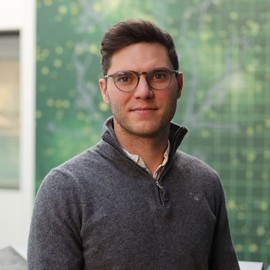
Edward N Stanhope
Senior Lecturer Sport Therapy & Assistant Professor Clinical Trials
Edward is a Senior Lecturer in Sport Therapy at the University of Staffordshire and Assistant Professor and Programme Director for the MSc Clinical Trials (Distance Learning) at the London School of Hygiene & Tropical Medicine. His research focuses on exercise and physical activity for people living with cancer and other non-communicable diseases, and on clinical trial methodology.